Leadership Lessons from Philmont Scout Ranch

Introduction
When my son's scout troop asked me to be the adult lead for 7 teenage boys travelling halfway across the country, I had to pause and evaluate if I was up to the challenge. I myself would by taking Command of an Operations Group in Japan, getting my feet under me for a few days and then flying halfway around the globe to pick up these 7 teenagers and get them to the remote desert of New Mexico. But with my son's heart in my hands, and the prospect of them not being able to go unless someone stood up, I took the lead.
Philmont is one of several high-adventure bases operated by Scouting America, alongside Northern Tier National High Adventure Bases, Florida National High Adventure Sea Base, and Summit Bechtel Reserve. Each offers a different environment—mountains, wilderness lakes, open ocean, or rugged terrain—but they all operate on the same principle: youth lead, and adults step back. Planning, decision-making, and execution fall to the participants themselves, creating an environment where leadership moves from theory to practice, tested in real conditions.
I’ve spent time in that environment, where the terrain exposes weaknesses quickly and rewards preparation just as fast. The lessons learned there don’t stay on the trail. They follow you into conference rooms, team meetings, and one-on-one conversations with people who depend on you.
These Philmont Scout Ranch leadership lessons were emphasized to me based on my experience with my son in summer 2024. And they apply equally to new supervisors building their first team and to adults shaping young leaders in scouting programs.
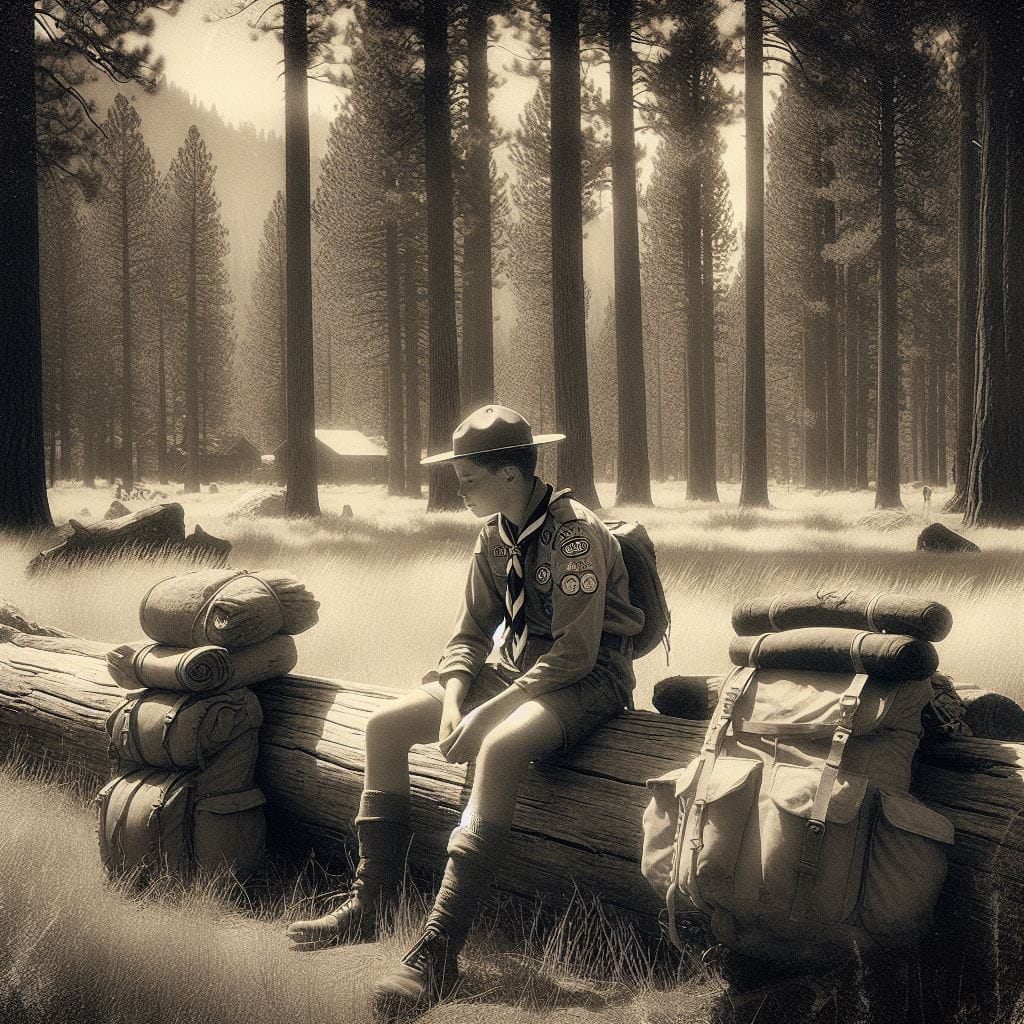
Sometimes Leading Means Stepping Back
Develop Leaders Through Scout-Led Leadership
The most counterintuitive truth about leadership is that your job is not to be the center of it.
The foundation of scouting is scout-led leadership. Adults are not there to command, micromanage, or ensure perfection. Their role is narrower—and more difficult. Ensure safety. Ensure learning happens. That’s it.
That restraint is hard. Watching a young leader make a suboptimal decision when you know a better one is uncomfortable. But stepping in too early robs them of the very experience they need to grow.
Stepping in too early robs others of the very experience they need to grow.
New supervisors fall into the same trap. The instinct is to fix problems, answer every question, and maintain control. It feels productive. It feels responsible. But it creates dependency instead of capability. What's worse is that it stifles the team's creativity and initiative.
Real leadership leverage comes from developing others, not replacing them.
Takeaway for New Supervisors
Define your job in two sentences. If it sounds like: “I make sure everything gets done correctly by doing it myself or stepping in constantly,” you’re not leading—you’re bottlenecking.
But isn't that what I am supposed to do? In a word, No. Rewrite and rewire your leadership to: “I ensure the team succeeds by developing people and removing obstacles.”
Building School-Age Leaders
What if you are in a youth mentorship role– teacher, coach, parent, or just a trusted adult? Developing young leaders doesn't require a formal program. It requires intentional structure and the discipline to let them own the outcomes.
- Assign real leadership roles (crew leader, assistant crew leader) and let them make decisions—even imperfect ones
- Use small teams (the patrol method) so responsibility is clear and shared
- Debrief after mistakes instead of correcting in the moment—ask, “What would you do differently next time?”
Those are solid principles. But what do they actually look like in practice?
Example: Your house. The problem– messy kitchen.
- Assign a Leader: "You're the Kitchen Boss tonight." Their job is not to clean– it's to lead. They assign roles and ensure the standard is met.
- Define Success Upfront: Ask, "How will we know the kitchen is clean?" Push for specifics– no food on counters, dishes put away, sink empty, trash taken out. Make them think through what "done" actually means.
- Step Back: Let them execute. Resist the urge to jump in, correct, or redo things mid-process.
- Hold the Line: When they say they're done, inspect against the standard with them. If it's not clean, it's not done. They go back and fix it. You don't.
- Debrief: Afterward, ask: "What did we miss? What will we do differently next time?"

You'll usually hear something like, "I didn't see that plate," or "We forgot the trash." Good– that's the point. Now have them solve it. "Next time, I'll check the counters one more time before we finish" or "We'll assign someone to trash at the start."
That's leadership development. Not lectures. Not stepping in. Ownership, standards, and reflection.
Half the Battle Is Having a Plan
Leadership Planning Skills for New Managers
Most failures in leadership are not about effort—they’re about poor planning.
At Philmont, planning mistakes are predictable. Scouts underestimate how long a hike will take, forget critical gear, or fail to account for elevation gain. That’s not a character flaw—it’s inexperience.
You've got to have some experience, to have some experience
The same thing happens with new managers. They don’t fail because they lack motivation. They fail because they underestimate complexity, skip contingency thinking, and confuse activity with preparation.
Planning is a skill. And like any skill, it can be developed intentionally.
5 Leadership Planning Tips
- Work backwards from the end goal
Define success clearly, then map the steps required to get there. - Run a pre-mortem
Ask: “If this fails, why will it fail?” Then mitigate those risks upfront. - Write daily priorities
Not a vague to-do list—3–5 clear priorities that actually move the mission forward. - Build in buffer time
Everything takes longer than you think. Plan accordingly. - Conduct a debrief/after-action reviews (AARs)
What worked? What didn’t? What will we change next time?
These habits don’t eliminate friction, but they dramatically reduce preventable mistakes.
Takeaway for New Supervisors
Building School-Age Leaders
- Let kids plan their own meals, routes, and gear lists—and live with the outcomes. Cold, wet, and hungry is a great teacher more than an adult lecture.
- Run low-stakes “mission planning” exercises before trips (map reading, time estimates)
- Conduct simple debriefs/AARs after activities: “What went well? What didn’t?”
You Cannot Afford to Be the Weak Link
Competence and Earning Respect as a Leader
Leadership starts with credibility, and credibility starts with competence.
Most people remember the social dynamics of adolescence—being judged, included, or excluded based on perceived strength or weakness. That dynamic doesn’t disappear in adulthood. It just becomes more subtle.
In the workplace, a supervisor who lacks competence doesn’t get openly mocked—but they do lose trust. Their input carries less weight. Their team disengages. Respect erodes quietly.
For new supervisors, this is non-negotiable. You don’t need to be the best at everything. But you cannot be the weakest link in the areas that matter most to your team.
Three anchors matter here:
Be competent. Stay curious. Orient toward excellence.
If your motivation is purely transactional—a paycheck, a title—people will sense it. That mindset spreads, and performance decline follows.
Takeaway for New Supervisors
Identify one area where you are currently the weak link. Be honest. Then take one concrete step this week to close the gap—training, reading, asking for feedback, or deliberate practice.
Building School-Age Leaders
- If your class is struggling with a concept, ask one of the kids who understands to teach it in a way that makes sense to them.
- Encourage scouts to pursue merit badges in areas where they struggle, not just where they excel
- Require personal ownership of gear preparation—no last-minute adult fixes.
- Set and uphold physical fitness expectations for high-adventure activities. We had a scout who was weak in this area and it just was not pleasant for anyone.
Teaching Is Not Optional — It Is the Job
Leader as Teacher and Mentorship in Leadership
If you are not developing people, you are not leading—you are consuming the organization.
In scouting, teaching is built into the system. Older scouts teach younger ones. Skills are passed down deliberately. Leadership is reinforced through instruction.
In many workplaces, training is treated as an obligation—something to check off when onboarding a new employee. That mindset limits growth.
The best leaders see teaching as their primary output. Their legacy is not what they personally accomplish, but what their people become capable of doing.
Teaching requires patience. It requires clarity. And it requires humility—especially when you have to explain something more than once. It is also most effective when it uses the power of relationship over positional authority to create influence.
Takeaway for New Supervisors
Building School-Age Leaders
- Require “teach-back” moments where scouts demonstrate what they’ve learned
- Implement junior leader training sessions led by older scouts
- Create cross-patrol skill exchanges to broaden exposure and confidence
Stepping back develops leaders: Your role is to guide, not control—whether in the field or the workplace
Planning drives performance: Most failures are preventable with better preparation and reflection
Competence earns respect: Credibility comes from capability, not title
Teaching multiplies impact: Leaders are responsible for developing others, not just delivering results
Conclusion
As I reflect on my time with my son on that mountain, I am thankful for the lessons it taught me. The mountain doesn’t care about your title, and frankly neither did any of those kids care about my new "Operations Group Commander" title. The mountain doesn’t care how experienced you think you are or how confident you sound in a meeting. At Philmont Scout Ranch, what matters is simple: Did you prepare? Did you carry your weight? Did you help your team succeed? These are quite simple lessons I hope the boys grasped and will carry with them for their lives.
The last lesson for myself and for you is, did you step back enough to let others grow?
Those same questions apply whether you’re leading a patrol of teenagers or managing your first team as a new supervisor. The environment changes, but the standard doesn’t.
If you’ve had your own version of a “Philmont moment”—on a trail, in an office, or somewhere in between—share your leadership lessons in the comments. And if you’re looking to grow as a leader, explore more posts on thenathanpowell.com.





Member discussion